Access to NJIT Clusters
The following instructions are provided to access NJIT HPC clusters from a local computer.
Getting a Login
Faculty can obtain a login to NJIT's HPC by sending an email to hpc@njit.edu. Students can obtain a login either by taking a class that uses one of the systems or by asking their faculty adviser to contact on their behalf. Your login and password are the same as for any NJIT AFS system.
Access to Clusters
Make sure the user is connected to the Wi-Fi network: NJITsecure if the user is on campus. If working off campus, NJIT VPN is required. Please find the details here.
Here we will provide instructions for connecting to NJIT HPC on Mac/Linux and Windows OS.
Update
In the recent update (Sep 10th 2024) Cisco two-factor authentication (TFA) is deployed, similar to what is already deployed on NJIT websites and VPN.
Open terminal from Launchpad and select terminal.
Type the following in the terminal and replace $UCID with your NJIT UCID..
Users will be prompted for your password. Enter your NJIT UCID password. Users can omit the -X -Y if you are not using a graphic interface. Once the password is provided, User will authenticate via Cisco two-factor authentication (TFA)
Based on the option provided, user will be logged in after succesfull authetication.
Download the MobaXterm from this link. Open MobaXterm after installation is completed. Select Start local terminal to open the terminal.
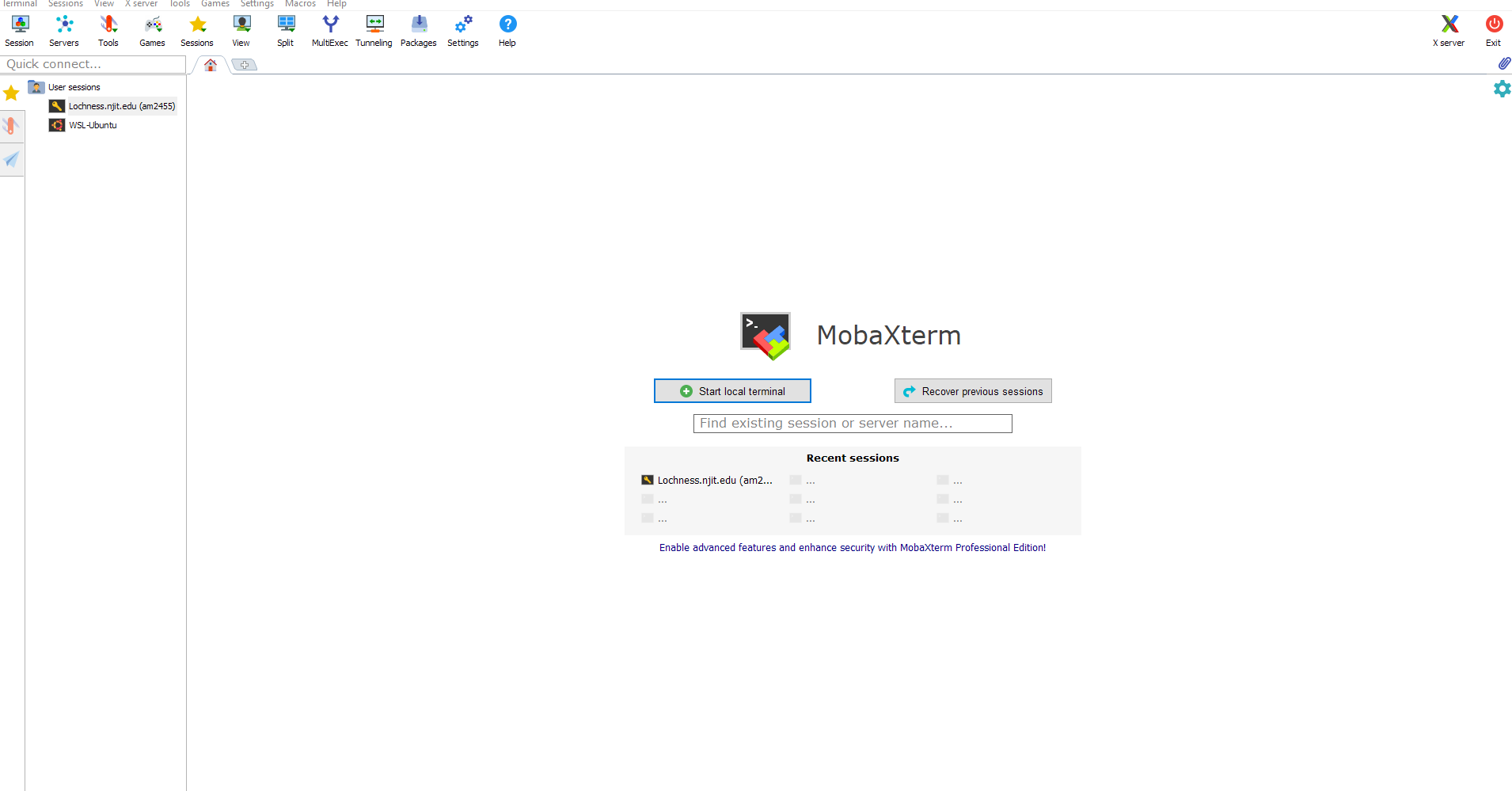
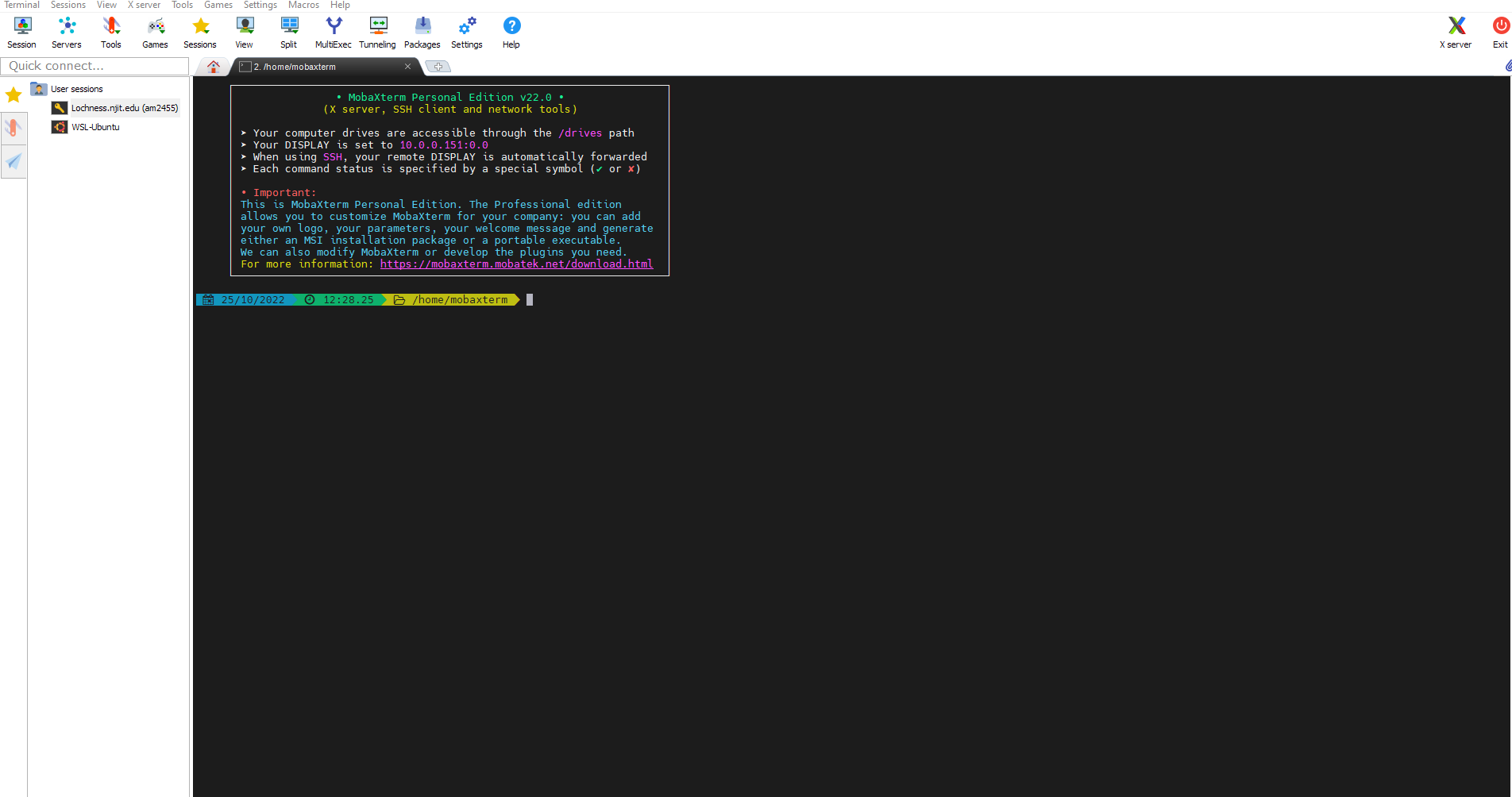
Type ssh $UCID@wulver.njit.edu. Replace $UCID with your NJIT UCID.
 .
.
User will be prompted to type the password. The password is NJIT UCID password. After successful login, user will see the following in the terminal, which means the user is now connected to HPC.
Users can also access the Wulver cluster directly from a web browser using Open OnDemand, with no local SSH client or terminal setup required.
Log in to https://ondemand.njit.edu with your NJIT UCID and password, then authenticate via Cisco two-factor authentication (TFA). From the dashboard, select Clusters and choose the Wulver shell. This opens a web shell that functions like a standard terminal session on a login node, allowing users to run commands, submit and monitor jobs, and manage files.
Tip
If you are on Windows or do not have access to a local terminal or SSH client, the web shell provides a convenient alternative with no additional setup required.
For more details, including web shell access and cluster system status, see the OnDemand Clusters overview.
Transfer the Data from the Local Machine to Clusters or vice versa
Users need to use the command in the terminal to transfer in and out the data.
rsync:
-
Transfer the data from local machine to HPC cluster
-
To transfer the data from HPC cluster to local machine use
scp:
-
Copy files from remote machine to local machine
-
Copy files from local machine to remote machine
-
Example of scp:
Copy the “example” folder recursively to/home/dir
User needs to select the follow terminal folder of the left pane of the MobaXterm terminal.
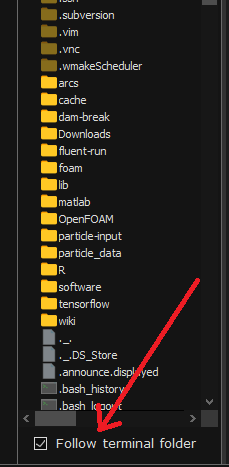
Next, to transfer the data from the local machine to Wulver user needs to select the Upload to current folder option, as shown below. Selecting this option will open a dialogue box where user needs to select the files to upload.
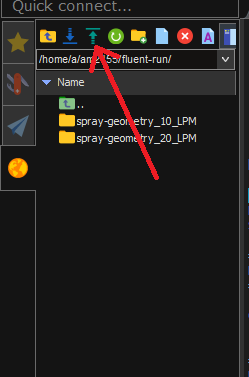
For transferring the data from Wulver to the local machine user needs to select the directory or the data from the left pane and then select Download selected files.
Users can transfer files between the local machine and the cluster directly from the browser using the File Manager in Open OnDemand.
After logging in to https://ondemand.njit.edu, select Files from the dashboard. This provides access to your $HOME directory as well as the Project, Research, and Scratch filesystems on Wulver.
- To transfer data from the local machine to the cluster, navigate to the destination directory and select Upload, then choose the files to upload.
- To transfer data from the cluster to the local machine, select the files or directories and click Download.
- Use Change Directory to jump to a specific path, and New Directory to create folders.
Note
This method is intended for small files such as job scripts or input files. For larger datasets, please use command-line tools such as rsync (see the Mac/Linux tab).
For more details, see the OnDemand Files guide.